Friday, February 16, 2018

Homemade Low-Carb Zucchini Pickles

Homemade Low-Carb Zucchini Pickles

This pickle recipe was originally given to me by my very good friend, when she gave us a jar and we devoured it in the space of a few days. Clearly, she had no intention of being a slave to our pickle passion!

These pickles are crunchy, tangy, a bit sweet and have a lovely spiced undertone. They are super easy to make and only require a bit of patience. I tweaked the original recipe to make it low carb and, hand over my heart, I swear you can’t tell the difference.

We like to eat these pickles with a sharp cheddar cheese. Well, let’s be honest; we just like to eat these pickles. Enjoy!

Preparation time
Hands-on:    15 minutes
Overall:     2 hours 20 minutes
Nutritional values (per serving, 2 tbsp/ 50 g/ 1.8 oz)
Total Carbs 3.2 grams
Fiber 0.8 grams
Net Carbs 2.5 grams
Protein 0.8 grams
Fat 0.3 grams
of which Saturated 0.1 grams
Energy 22 kcal
Magnesium 15 mg (4% RDA)
Potassium 206 mg (10% EMR)

Macronutrient ratio: Calories from carbs (63%), protein (20%), fat (17%)

Ingredients (makes 2 large jars)

Nutrition facts are estimated as some of the ingredients are only used for pickling (due to negligible effects on nutrition facts, I fully included them in the calculation). Only salt is counted partially to more accurately reflect the sodium content per serving (as listed in the KetoDiet App.

Instructions
  1. Wash your zucchini and trim the ends.
  2. Using a sharp knife or a mandolin, slice the unpeeled zucchini very thinly. Cut the onions into small wedges and separate the layers.
  3. Put the zucchini and the onion into a large bowl and sprinkle with the salt and cover with water.
  4. Leave for one hour, and then drain.
  5. Combine vinegar, Erythritol, and spices in a large saucepan and bring to the boil. Take saucepan off the heat.
  6. Place the drained zucchini mix into the vinegar and leave to soak for one hour.
  7. Return pan to the heart and bring to the boil. Reduce heat and simmer for three minutes.
  8. Spoon into sterilised jars, top off with the vinegar blend and cap tightly. Once opened, store in the refrigerator for up to 2 months.
http://ift.tt/2sBkWF1

Thursday, February 15, 2018

Keto Jalapeño Popper Stuffed Burgers

Keto Jalapeño Popper Stuffed Burgers

This low-carb Jalapeño Popper Stuffed Burger is a fun way to liven up a traditional burger!

We've stuffed this keto burger with cheddar cheese, bacon, and pickled jalapeños then sandwiched it between these keto buns with some additional toppings that are more traditional. To see how you can make keto friendly burger bun in a few simple steps, check out our video recipe below!

Preparation time
Hands-on:    10 minutes
Overall:     20 minutes
Nutritional values (per burger)
Total Carbs 14.3 grams
Fiber 8.7 grams
Net Carbs 5.5 grams
Protein 39.2 grams
Fat 48.8 grams
of which Saturated 17.7 grams
Energy 632 kcal
Magnesium 127 mg (32% RDA)
Potassium 801 mg (40% EMR)

Macronutrient ratio: Calories from carbs (4%), protein (25%), fat (71%)

Ingredients (makes 4 burgers)
  • 4 Ultimate Keto Buns, halved
  • 1 lb ground beef (450 g)
  • 1 cup shredded cheddar cheese (4 oz/ 113 g)
  • 4 thin-cut slices bacon, crisped up (60 g/ 2.1 oz) - weight after cooking: 32 g/ 1.1 oz
  • ½ cup pickled jalapeños (52 g/ 1.8 oz)
  • 4 slices tomatoes (70 g/ 2.5 oz)
  • handful fresh greens of choice (28 g/ 1 oz)
  • Optional: serve with my Keto Ketchup, Homemade Mustard or Keto BBQ Sauce, and a big bowl of dressed greens.

Note: For more bread options (nut-free, flax-free, etc.), check out my other keto & low-carb bread recipes.

Instructions
  1. Make the Ultimate Keto Buns by following the video recipe. They will be darker in color if you use brown flax, or light in color if you use golden flax. If you don't have any, this will take an extra hour. You can make a double batch of keto buns and keep them in the freezer.
  2. Divide the beef into 8 equal pieces. Patty out a piece of each piece and fill with cheese, jalapeños,... ... then crispy bacon (you can crisp it up in the oven or on a pan).
  3. Top with the another piece and pinch the sides together sealing up the burger.
  4. Grill burgers over medium-high heat, flipping once until desired doneness is reached, approximately 4 minutes each side for medium.
  5. You can eat the burgers with a bowl of dressed greens or ... ... place the burger in a bun and top with desired burger toppings. Enjoy!
http://ift.tt/2o2b9TO

Wednesday, February 14, 2018

Low-Carb Cheese & Capsicum Stuffed Meatloaf

Low-Carb Cheese & Capsicum Stuffed Meatloaf

This meatloaf brings my childhood flooding back with each bite. My Dad used to make it for us and I can recall thinking that it was incredibly fancy to have all that gooey melted cheese hidden inside a lush meatloaf.

Yep, I was pretty easily impressed. Come to think of it, I’m still impressed if you give me melted cheese.

I had to make a couple of tweaks to make it low carb, but nothing that changed the core flavour of this meatloaf. I love to serve it with cauliflower rice or mashed cauliflower.

Try it, give my Dad a big clap. Enjoy!

Preparation time
Hands-on:    15 minutes
Overall:     1 hour 30 minutes
Nutritional values (per serving, 2 thick slices)
Total Carbs 10.7 grams
Fiber 6.1 grams
Net Carbs 4.6 grams
Protein 32.9 grams
Fat 39.8 grams
of which Saturated 16.3 grams
Energy 530 kcal
Magnesium 112 mg (28% RDA)
Potassium 579 mg (29% EMR)

Macronutrient ratio: Calories from carbs (4%), protein (26%), fat (70%)

Ingredients (makes 6 servings) Meatloaf:
  • 500 grams minced beef (1.1 lb)
  • 1 small yellow onion, finely chopped (70 g/ 2.5 oz)
  • 2 tsp minced garlic
  • 2 large eggs
  • ¾ cup flaxmeal (113 g/ 4 oz)
  • 2 tbsp coconut aminos (30 ml/ 1 fl oz)
  • 4 tbsp unsweetened tomato passata (60 ml/ 2 fl oz)
  • 1 tbsp dried herbs of choice or 2 tbsp fresh
  • 1 green capsicum (green pepper), finely chopped (100 g/ 3.5 oz)
  • ½ cup shredded cheddar cheese (57 g/ 2 oz)
  • 200 g sliced Gouda cheese (7.1 oz)
  • ½ cup flaked or grated Parmesan cheese (30 g/ 1.1 oz)
Baste:
  • 2 tbsp coconut aminos (30 ml/ 1 fl oz)
  • 4 tbsp unsweetened tomato passata (60 ml/ 2 fl oz)
Instructions
  1. Pre-heat oven to 180 C/ 355 F.
  2. Place the ground beef, onion, garlic, eggs, flaxmeal, 2 tbsp of coconut aminos, 4 tbsp of passata and herbs in a large bowl and combine well by hand.
  3. Line a baking tray with silicone paper and set to one side.
  4. Place a sheet of silicone paper on your surface and tip the beef mix onto it. Using your fingertips, push and pat the mixture into a rectangular shape, making sure that it is no wider than your baking tray (do not make it too thin or it will break during baking).
  5. Once ready, place the slices of gouda over the beef, overlapping if required. Sprinkle with capsicum and finish with the parmesan.
  6. Starting on the short end of the rectangle, and using the paper to assist, start rolling the meatloaf up as tightly as you can. Make sure that you peel the paper back as you roll, so that it doesn’t get trapped in the roll.
  7. Pinch the ends closed as much as you can to avoid the cheese oozing out too much.
  8. Place the meatloaf, seam side down, on your prepared baking tray and cover with foil. Bake for 15 minutes covered with foil.
  9. Remove the foil and bake for a further 15 minutes.
  10. Combine the baste ingredients in a small jug. Baste with the baste and cook for a further 30-45 minutes, depending on how large your roll is. Continue to baste as much as you like. Enjoy warm or let it cool down and store, wrapped in foil, in the refrigerator for up to 4 days or freeze.
http://ift.tt/2EEQ9vT

Tuesday, February 13, 2018

Cheesy Baked Broccoli

Cheesy Baked BroccoliSuper cheesy and easy to make, it’s a wonderfully delicious keto friendly treat! You can check out more delicious -> RECIPES http://ift.tt/2Em8vCu

New Tracking Options Are Now Available in KetoDiet

New Tracking Options Are Now Available in KetoDiet

Hi Friends, I have great news for you!

After several months in development and beta testing, a new update of KetoDiet & KetoDiet Basic for iOS (iPhone/ iPad) has been released. Make sure you have the latest version by launching App Store and switching to the Updates tab.

Although this is an iOS only update, we've been working on Android and will release an update in the next few weeks.

What's New? New tracking features

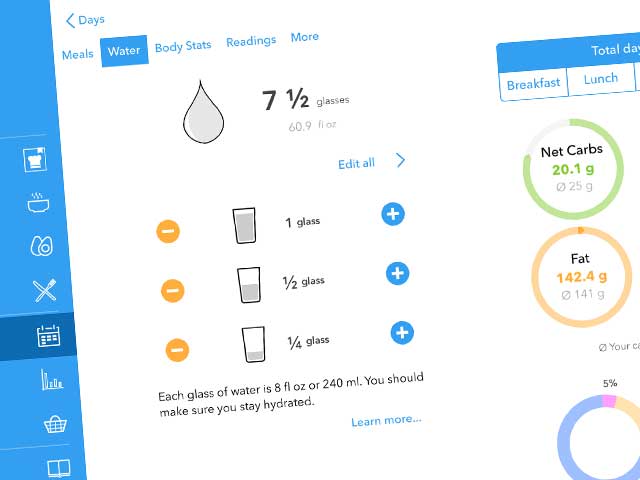
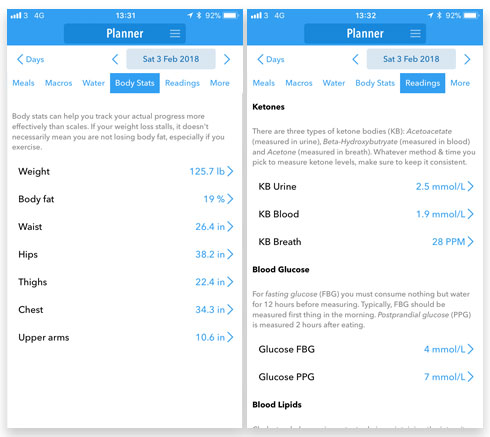
Your daily view is now expanded into different tabs where you can track your meals, water intake, body stats, readings and more. We have improved the Planner overview to give you a summary of your planned days at a glance.

Daily notes, mood & energy levels

Advanced tracking
  • Ketone levels (breath, blood and urine)
  • Blood glucose levels (fasting and postprandial)
  • Blood lipids (total cholesterol, HDL, LDL and triglycerides)

Daily water intake

Ingredients enhancements

The ingredient list has been changed to display net carbs 'per amount' (i.e. as defined) rather than the normalised 'per 100 grams' value. Displaying the normalised value has caused some confusion amongst users so we decided to change it.

Additionally, when viewing the nutritional data of an ingredient, you can now change the reference amount. In other words, you can quickly switch between 1 cup, 100 grams, 1 tbsp etc.

Adding multiple ingredients to the Planner

When adding a single ingredient to your day (Quick Meal or scanning the barcode) you'll be asked if you want to repeat and add another one. This reduces the number of steps required to add multiple ingredients to your day. Using single ingredients rather than meals is a pattern we often see and many users prefer to do that.

Improved progress charts

Every chart now includes a legend that offers a direct way to edit or add new data points directly from Progress. This of course applies to data items that you can input directly and not data that is calculated, i.e. net carb limit, body stats, readings, mood, energy and water.

New how-to guide

Based on several requests, we created a new online guide on how to use the KetoDiet app. You can find it under Help > How to use KetoDiet. This guide will be updated as new features are added. Although it is focused on iOS, most of it also applies to Android as well.

New unit settings

With new tracking features for ketone, blood glucose and lipids, we have expanded our settings to provide a wider selection of measurement units. Additionally, you can now change units directly from Progress and from any keyboard that allows you to enter data in multiple units.

Improved date picker (calendar view)

We re-designed our date picker (calendar) to make it easier to select dates and date ranges. We now highlight days that have data including meals, body stats, etc.

Want to help us take KetoDiet to the next level?
If you find our Apps useful, please, leave a review on the AppStore/ Google Play. It's the best thing you can do to support us.
Thank you!

Future features
  • Unify KetoDiet Meals with KetoDiet blog meals so that any filtering can be applied universally
  • Allergy filtering options
  • Apple HealthKit & Watch support
  • Custom Ingredients: adding custom serving sizes and being able to specify values per slice, tablespoon, cup, etc.
  • Enable cloning & editing KetoDiet Meals
  • Add option for recipe notes in custom meals so that you have all you need to make your favourite recipe (instructions, cooking time etc.)
  • Universal search across all recipes, meals and ingredients when adding them to the Planner
  • Basket: improvements when adding meals from the Planner so they always list minimum amounts required to make a recipe, even if you only eat one serving in a given period of time.
  • Integration with KetoDiet diet plans: my free and premium keto diet plans with just one click
  • KetoDiet Challenges & community integration
  • More tracking options: hunger, activity, etc.
  • Add nutrition facts to hundreds of recipes included in my cookbooks so you can quickly add them to the Planner
  • and more features can be found here

Features are driven by your feedback! Feel free to leave a comment if you have anything else you would like us to add and if it's something we can do, we'll do our best to implement it in future updates.

http://ift.tt/2HdSlsH

Exogenous Ketones - What You Need To Know

Exogenous Ketones - What You Need To Know

Supplementing with ketone bodies has become increasingly popular over the past few years, when they were first made commercially available. People appear to be using these for many different reasons including that of weight loss and improved mental performance.

However, the exact understanding of these products is often not fully understood. This article aims to look at exactly what are ketone bodies, how do they work in the body and when or who should be using them.

What are Ketones?

To better understand exogenous ketones, we first need to look at exactly what ketone bodies are. When we restrict carbohydrates in the diet, we need to obtain fuel from alternative sources. Once the body is fully depleted of glycogen, it will then begin to break down fatty acids in the liver, to eventually produce ketone bodies. It is the ketone bodies that then act as an alternative fuel to glucose.

There are three different types of ketone bodies produced in the liver:

  1. Acetone (can be measured using breath ketone meter)
  2. Acetoacetate (can be measured using ketone urine strips)
  3. Beta hydroxybutyrate (BHB, can be measured using blood ketone meter) Side note: Technically speaking, BHB is not a ketone body as it contains a reactive OH-group in place of where a double bonded oxygen normally would be.

BHB does still act like a ketone in the body and is often the ketone body that is most utilised for energy.

What are Exogenous Ketones?

The word exogenous means to obtain something from out with the body. Unlike endogenous ketones that are produced by the liver from fatty acids, exogenous ketones are ingested through a form of supplementation.

Ketone Salts vs Ketone Esters

Regardless of the type of ketone supplements, all of them contain that of BHB.

There exists 2 different type of exogenous ketones:

  • Ketone salts - these are naturally derived BHB that is bound to a salt such as sodium, potassium or calcium.
  • Ketone esters - these are synthetically made and exhibit BHB in its raw form. These are more potent than salts and can raise the ketone levels higher than that of salts. However, they can be very unpalatable and cause gastrointestinal distress.

At the minute, it is only ketone salts that are commercially available with ketone esters mostly being used in research.

Potential Areas of Application

Whilst ketone supplementation appears to have gained in popularity, we need to better understand why and how they should be used. The below will look at the applications that currently have scientific evidence and clinical data.

Alzheimer's Disease (AD)

A feature of Alzheimer's disease (AD) is region-specific declines in brain glucose metabolism. Normally the brain is not able to switch effectively between using glucose or fat for energy and predominantly relies on that of glucose. Therefore, the problems with glucose metabolism in the brains of AD patients can have a significant impact on its function.

Replacing the normal glucose supply with that of ketone bodies may offer a therapeutic alternative. When ketone bodies have been used in animals and cell cultures, they have demonstrated neuroprotective qualities such as improving cell survival and cognitive performance (1).

In humans, a crossover study looked to examine the effects of acute elevation of the ketone body, BHB, on the cognitive function of 20 AD patients (2). They gave the patients 40 g of MCT oil and noticed a significant increase in BHB levels after 2 hours. After 90-minutes they were tested for changes in cognitive performance using a specific AD questionnaire. A significant correlation between performance on the cognitive test and BHB levels were observed, with those presenting with the highest BHB levels showing the most improvement.

Another randomised, double blind, placebo controlled trial was carried out in 152 patients to evaluate administration of a ketone based supplement (3). Serum ketone bodies were significantly elevated 2 hours after administration compared to a placebo. A significant correlation was observed between BHB levels and change in AD cognition scores. This essentially means that the more elevated the level of ketone bodies, the greater improvement in AD related cognition symptoms.

The exact level that BHB needs to be raised to get these benefits is still not fully known. One case study reports that for ketone bodies to provide energy to the glucose deprived parts of the AD brain, BHB levels must rise above 0.2 mM (4). In this patient, after 6-8 weeks of ingesting a ketone ester, there were marked improvements in activities of daily living.

Parkinson's Disease (PD)

Due to the proposed impact that ketone bodies can have in the brain, it is hypothesised that the ketogenic diet may be an effective treatment for PD.

Researchers have looked at the impact of ketone bodies in animals and cell cultures. In one study, they showed that administering exogenous ketones for 7 days offered protection against structural and functional effects that occur in PD (5).

To date, there has been no human clinical study utilising exogenous ketones in patients with PD. However, there is a growing body of case studies using exogenous ketones for PD. The results of the case studies are showing some promising results. One case study which was carried out at the ASPI facility in Tampa, Florida provided one patient with 10 g of BHB. After 30 minutes the patient reported vast improvements in eye movement which is a characteristic in PD.

Athletic Performance

One of the main reasons that exogenous ketones have been developed was for use in athletes. In sport science, it is believed that when performing, the body operates best by using glucose as its main fuel. A recent study (6) which compared athletes who followed a habitual high carbohydrate diet to that of a low carbohydrate diet showed this to not be the case. It showed that individuals who are keto-adapted, can operate at a high athletic level by gaining most of their energy through that of fat and ketone bodies.

A study carried out in rats supplemented 30% of their diet with a ketone ester. For 5 days, the rats ran 32% further on a treadmill than did the control rats and outperformed on cognitive tests (7).

A lab based in Oxford, England has carried out a series of studies in high-performing athletes utilising ketone esters. From their work, they have shown that having higher circulating levels of ketone bodies in athletes can cause physiological alterations which may improve physical performance in some athletes (8). It appears to do this through the ketone bodies offering an effective alternative energy source for the body during exercise.

Further to improving performance, nutritional ketosis is hypothesised to help facilitate muscle recovery from intense exercise (9). One study gave eight athletes a novel oral ketone ester drink every 60 minutes during the initial 5 hour of recovery, following a glycogen depleting maximal exercise bout (10). They found that BHB levels reached an average level of 5mM which was able to increase a muscle signalling pathway known as mTORC1. This pathway induces leucine-mediated protein synthesis. Essentially this means that ketone esters could promote muscle building following exercise.

It should be noted that most of the evidence we have in athletes, have been done with ketone esters and not salts (as noted earlier the only commercially available exogenous ketone supplements). As ketone esters are much more potent than that of salts, it may mean the salts do not provide the same therapeutic potential.

Weight Management

One area of use with exogenous ketones that is being mostly misunderstood is its role in weight management. There are many people out there claiming that by ingesting exogenous ketones it will somehow cause you to lose weight at a faster rate. It is important to note that this claim is completely unsubstantiated.

Why Ketone Esters Won't Promote Fat Loss

There is a belief that people think the higher their ketone levels, then the greater rate of weight loss. Where this comes from is the understanding of how your body gets into ketosis and how this can promote weight loss.

As we know, when you restrict carbohydrates from the body, it forces it to get energy from someplace else, enter ketosis. Eventually after all your glycogen stores are depleted your body will turn to its fat stores to break it down and produce ketone bodies, providing it with the energy it needs.

Therefore, to lose weight, the ketone bodies produced need to be coming from your body stores not that of exogenous ketones. If you provide the body with the energy it needs from ketones out with the body, it has no need to break down its own body fat and therefore, it will won't result in a weight loss.

Now that we've cleared up the issue of ketone supplements not causing weight loss, let's look at how these could help to potentially aid it in other ways.

Keto-flu

When you first begin with a low carbohydrate approach, you can encounter what is known as keto-flu. Simply put, this is a list of side effects including (but not limited to):

  • Headaches
  • Nausea
  • Lethargy
  • Bad breath
  • Heart palpitations
  • Muscle cramps

There can be a variety of reasons for this going on but namely it is down to the water loss and subsequent change in electrolytes (including sodium, potassium and magnesium), that occurs when you first start on a low carbohydrate diet.

Normally speaking, supplementing with some additional salt or 1 cup of bone broth per day can help to alleviate these symptoms. For some people though, this can sometimes not be enough to alleviate the side-effects. Case study reports have now shown that the ketone salts can help stop people experiencing some of the side-effects listed above.

To date, there are no clinical studies that have looked at this, but hypothesis would suggest that it could be due to the salts contained in some of the supplements and providing the body with a higher BHB level could also be helping.

Appetite Suppression

One area that supplementing with ketones could potentially help with, is around appetite control. Normally, diet-induced weight loss causes the body to experience increased hunger and advanced feelings of fullness through appetite-based hormones (11).

The ketogenic diet alone has been reported to be extremely satiating, with one study demonstrating the impact that ketone bodies can have on the hunger stimulating hormone, ghrelin (12).

In a study that looked at the timeline of changes in appetite during weight loss with a KD, it showed that a 10% weight loss did not result in an increase in appetite, that is often seen when losing weight (13).

One study has looked at the specific effects of administering a ketone ester drink on appetite (14). In comparison to a sugar based solution, those who consumed the ketone ester had significantly lower levels of hunger stimulating hormones. They also reported a suppression in hunger and a desire to eat 1.5 hours after consuming the esters.

Potential Side Effects of Exogenous Ketones

Whilst the area of supplementing with ketones does appear to be promising, there are some potential side effects that people may encounter.

Gastrointestinal Problems

The first thing that appears to be getting reported is the impact that the supplements can have on the GI tract. This is mostly the esters that are causing this upset, likely due to their potency and so impact when the body must digest and absorb them through the gut.

As with other supplements, like MCT, the answer to this may be to lower the dose until the body builds up a little more tolerance to the supplements.

Dehydration

This side effect is more aimed at the ketone salts. Since the BHB in these supplements are bound to that of a salt, this could cause a further change in the electrolyte balance in the body, particularly promoting that of dehydration. Likewise, the increase in ketone level could cause the body to dump more of these out of the kidney which could cause excess urination and again lead to dehydration.

Long-term Safety

One area that we lack any data on at the minute is the long-term use of these supplements. Again, whilst they are showing potential benefits in certain areas, we do not know what impact constantly ingesting and having a higher level of BHB in the body will do. In time, more longer-term trials in larger populations are needed.

However, a study has been carried out to look at the safety and tolerability of exogenous ketones in humans in the short term. It reports that GI distress can be caused at a high dose, but overall, they are very well tolerated in the human body (15).

Take Home Message

The use of exogenous ketone supplementation is proving a very exciting area. They appear to offer specific therapeutic potential in neurological disorders, cognitive function, athletic performance as well as helping aid the ketogenic diet. Likewise, there are other emerging areas of interest for the use of ketone esters including within cancer (16), certain skin (17) disorders and ALS (18).

However, there are still a lot of unknowns that we have surrounding these supplements, particularly in the long-term application of them. Also, we do not know what would happen if you simply consume these products without following a properly formulated, ketogenic diet.

Until there is more robust clinical data on the use of exogenous ketones, it would be advisable to seek help from a properly qualified health professional before consuming them.

http://ift.tt/2ChyOnv

Sunday, February 11, 2018

Keto Brown Butter Pecan Ice Cream

Keto Brown Butter Pecan Ice Cream

This is now known as “the ice cream that nearly broke me” in my family.

I love ice cream but it’s got to be creamy and smooth. I find that low carb ice creams can easily become icy or just not quite right as far as the texture goes. I know that using egg yolks helps with the creaminess and stability and I also know that vegetable glycerine will do wonders in stopping that iciness.

But I did not know that xylitol will result in a much softer ice cream, so the first batch that I made had a lot more xylitol in it. Not only was it waaaay too sweet, but it also wouldn’t freeze. No matter what I tried, I could not get it past the extremely soft serve stage. I made edible anti-freeze! I will say that the texture was divinely smooth though.

So, I made and re-made batches until I found the perfect balance of these ingredients to create a luscious, creamy ice cream. I was so sick of the sight of ice cream by the end of it! But it was worth every second. Enjoy!

Preparation time
Hands-on:    30 minutes
Overall:    3-4 hours
Nutritional values (per large scoop, 113 g/ 4 oz)
Total Carbs 7.5 grams
Fiber 1.6 grams
Net Carbs 5.9 grams
Protein 3.7 grams
Fat 39.6 grams
of which Saturated 18.1 grams
Energy 398 kcal
Magnesium 24 mg (6% RDA)
Potassium 115 mg (6% EMR)

Macronutrient ratio: Calories from carbs (6%), protein (4%), fat (90%)

Ingredients (makes 10 servings)
  • 500 ml heavy cream (16.9 fl oz)
  • 250 ml unsweetened almond milk (8.5 fl oz)
  • 80 g unsalted butter (2.8 oz)
  • 1 ½ cups pecans, chopped into your preferred size (163 g/ 5.7 oz)
  • 2 tsp sugar-free vanilla extract
  • 4 large egg yolks
  • 1 tsp vegetable glycerine
  • ¼ cup granulated Xylitol (50 g/ 1.8 oz)

Note: Xylitol improves the texture and add softness but you can use other low-carb sweeteners too: Erythritol, Swerve, stevia or monk fruit based sweeteners.

Instructions
  1. Preheat oven to 180 C/ 355 F. Melt 20 grams of the butter and toss through the pecans until coated.
  2. Spread out in an even layer on an oven tray and bake until browned. Keep an eye on them as they can burn very easily.
  3. Place cream, almond milk, vanilla, glycerine and erythritol into a pan and heat over gentle heat until erythritol has dissolved.
  4. Melt the remaining 60 grams of butter in a pan and keep heating it until it reaches a deep golden brown colour. Again, keep an eye on it so that it doesn’t burn. Add the butter to the cream mixture and whisk well.
  5. Place the egg yolks in a mixing bowl and beat well. Add one third of the cream mixture to the egg yolks to temper the yolks, beating well.
  6. Slowly add the egg yolk mixture in to the cream, beating the whole time, and place back over medium heat. Cook slowly until the mixture thickens.
  7. Pour into a bowl and set aside to cool. Place cling wrap over the surface of the custard to avoid a skin forming and chill in the refrigerator until cold, preferably overnight.
  8. Place mixture into your ice cream maker and mix until soft serve consistency is achieved.
  9. Fold the pecans through the mix, retaining a handful for garnish.
  10. Spoon the ice cream into a container, sprinkle with remaining pecans and freeze until firm, usually only a couple of hours. Store, in a container, in the freezer for up to a month.
http://ift.tt/2Cf3aXK