Sunday, April 22, 2018

The Best Keto Breadcrumbs

The Best Keto Breadcrumbs

Substituting breadcrumbs on a keto diet seems easy. You can use almond flour or flax meal but let's face it - they are not the same as proper breadcrumbs.

These are the best low-carb and grain-free breadcrumbs - just like the real deal! You won't even know they are keto. You can use them just like regular breadcrumbs: in meatballs, chicken nuggets or breaded cauliflower. This recipe is based on my Ultimate Keto Buns which went viral on social media. It does take time to prepare but it's totally worth it!

Preparation time
Hands-on:    20 minutes
Overall:     2 hours 30 minutes
Nutritional values (per 1/4 cup/ 22 g/ 0.8 oz)
Total Carbs 5.8 grams
Fiber 4 grams
Net Carbs 1.8 grams
Protein 5 grams
Fat 7.6 grams
of which Saturated 1.2 grams
Energy 102 kcal
Magnesium 47 mg (12% RDA)
Potassium 189 mg (9% EMR)

Macronutrient ratio: Calories from carbs (7%), protein (21%), fat (72%)

Ingredients (makes about 5 cups) Dry ingredients: Wet ingredients:
  • 6 large egg whites (reserve yolks for another recipe)
  • 2 large whole eggs
  • 2 cups boiling water (480 ml/ 16 fl oz)

Note: Don't waste the egg yolks - use them for making Home-made Mayo, Easy Hollandaise Sauce or Lemon Curd. For nut-free and flax-free options, read the tips in my Ultimate Keto Buns recipe.

Instructions
  1. Preheat the oven to 175 °C/ 350 °F. Prepare the buns (same recipe as the Ultimate Keto Buns). Mix all the dry ingredients (apart from the sesame seeds). Add the egg whites and eggs and process well using a mixer until the dough is thick. Add boiling water and process until well combined.
  2. Using a spoon, make 8-10 buns and place them on a baking tray lined with parchment paper.
  3. Remove from the oven, let the tray cool down and place the buns on a rack to cool down for a few minutes.
  4. Top each of the buns with sesame seeds (or any other seeds) and press them into the dough, so they don't fall out. Place in the oven and cook for 45-50 minutes.
  5. Lower the temperature to 100 °C/ 210 °F. Dice the bread. Place on a tray and dehydrate for 45-60 minutes.
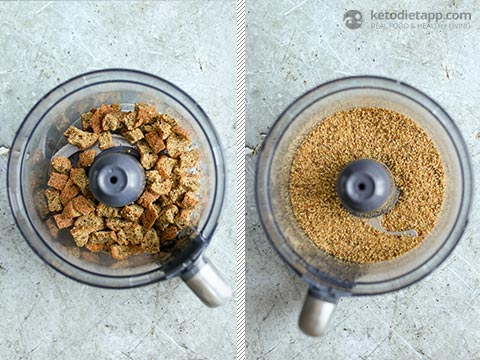
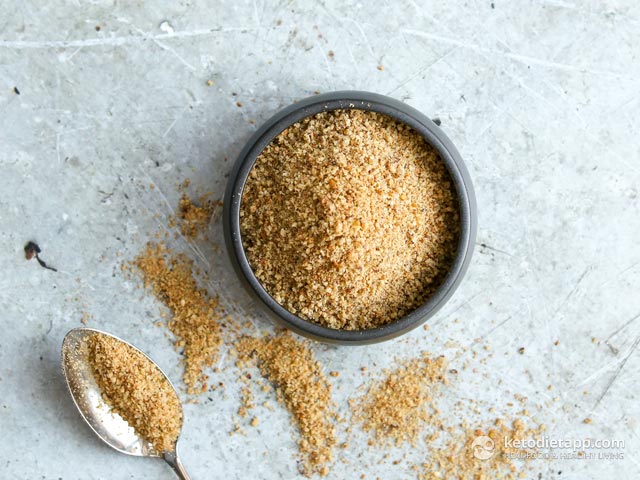
  6. When done, remove from the oven and set aside for 5-10 minutes. Place in a food processor and process until fine.
  7. Place in an airtight container and store at room temperature for up to 2 weeks, or freeze for up to 6 months.
https://ift.tt/2F8iRRW

Friday, April 20, 2018

Low-Carb Summer Berry Galette

Low-Carb Summer Berry Galette

This delicious galette came about after I saw a stunning stone fruits galette on the cover of a food magazine.

I pondered it for a while, feeling a bit put out that I couldn’t make one because it looked so darn pretty. Suddenly it occurred to me that it might be possible to make a sweet Fat Head dough. I turned it over in my head for a bit longer, did an experiment or two and voila!

I worried that the juices from the berries would make the dough soggy, and when I pulled it out of the oven and saw the juices pooled around the base I thought it was a failure.

But no! The dough absorbs the sweet juices and still stays stable. Is there nothing that fat head dough cannot do?

This is so quick and easy to make, tastes delicious ad would be a great crowd pleaser. Enjoy!

Preparation time
Hands-on:    10 minutes
Overall:     30 minutes
Nutritional values (per serving, 1 slice)
Total Carbs 11.2 grams
Fiber 3.9 grams
Net Carbs 7.2 grams
Protein 11.7 grams
Fat 15.1 grams
of which Saturated 4.9 grams
Energy 218 kcal
Magnesium 54 mg (14% RDA)
Potassium 244 mg (12% EMR)

Macronutrient ratio: Calories from carbs (14%), protein (22%), fat (64%)

Ingredients (makes 1 galette, 6 slices) Dough: Filling:

Note: I used fresh, not frozen berries: about a cup of each raspberries, wild blueberries and blackberries. Frozen berries may end up too wet but try it and let me know.If you need to substitute keep in mind the following net carb values per 100 g/ 3.5 oz: blackberries contain 4.3 g net carbs, raspberries contain 5.4 g net carbs and wild blueberries contain 9.7 g net carbs.

Instructions
  1. Preheat oven to 220 °C/ 430 °F.
  2. Place fresh berries, sweetener and vanilla into a bowl and toss to combine.
  3. Place the mozzarella, cream cheese and almond flour together in a microwaveable bowl.
  4. Microwave on high for 1 minute. Stir well. Microwave on high for a further 30 seconds.
  5. Add egg, sweetener and pumpkin pie spice and stir well until combined.
  6. Roll out between two sheets of silicone paper. Lay dough on a lined baking tray.
  7. Spoon the berry mixture into the centre of the dough, in a rough circle. When spooning the berries from the bowl, try to leave as much juice behind as possible.
  8. Fold the edges of the dough around the sides of the berries. Sprinkle the exposed dough with the xylitol.
  9. Bake for 15 minutes. Store covered in cling wrap, in the refrigerator, for two days.
https://ift.tt/2HfETbr

Thursday, April 19, 2018

Can the Ketogenic Diet Help with Migraines?

Can the Ketogenic Diet Help with Migraines?

If you or someone you know experiences migraines, then you know these debilitating attacks are far more than mere headaches. In addition to severe, throbbing pain, migraines often also involve visual disturbances, nausea, vomiting, dizziness, extreme sensitivity to sound, light, touch and smell, and tingling or numbness in the extremities or face.

As many as 25% of migraine sufferers experience a visual phenomenon called an aura. Attacks typically last between 4 and 72 hours and in 15-20% of cases, the head pain is preceded by the other neurological symptoms (1).

Because migraines are increasingly recognized as neurological in origin, it’s possible ketogenic diets may have a therapeutic effect for people afflicted with these attacks. Ketogenic diets exert their effects via several mechanisms that induce multiple biochemical changes in the body and brain that improve neurological function (2, 3). Some of the mechanisms that are beneficial for various neurological disorders may also make them effective for migraines.

No One is Immune to Migraines

Migraines affect up to 15% of adults in North America and Western Europe, and they’re the seventh leading cause of disability in the world (4). In the US, up to 18% of women and 6% of men experience migraines, with many experiencing chronic migraine (at least 15 migraine days per month).

Women are affected disproportionately, partly due to fluctuating estrogen levels as attack triggers: about 28 million women in the US suffer migraines, and women make up 85% of chronic migraine sufferers (1).

Not even children are spared the pain and debilitation that accompany a migraine. About 10% of school-aged children suffer from migraines, and they’re absent from school about twice as much as those who don’t. In contrast to migraine prevalence in adults, in childhood, boys are afflicted more than girls are, but during puberty and adolescence the incidence shifts, and girls are affected more (1).

The Cost of Migraine: Physical, Emotional & Financial

According to the Migraine Research Foundation, healthcare and lost productivity costs associated with migraine are estimated to be as high as $36 billion annually in the US alone (1).

In 2015, the cost for treating chronic migraine was more than $5.4 billion, but the total cost of treating associated issues was over $41 billion. 113 million days of work are lost due to migraine, at a cost of around $13 billion to employers.

Of course, the burden of migraines isn’t limited to the pain and incapacity from the attacks, themselves. Beyond these, migraine increases the risk for other physical and psychiatric conditions, including depression, anxiety, and sleep disturbances. Overall, migraines drastically reduce quality of life.

What Causes Migraines?

It would be nice if all migraines were caused by the same thing, and people could simply avoid whatever that was. Unfortunately, migraine triggers are as diverse as the people who experience them, and even the same person may find that their triggers are unpredictable, causing a migraine sometimes, but not always.

Some migraine sufferers are able to identify dietary or environmental factors that trigger an attack, such as sensitivity to dietary histamines, sulfates or sulfites, monosodium glutamate (MSG), other additives and preservatives, or changes in barometric pressure. Some migraines may also come about due to acute hypoglycemia.

Common Triggers for Migraines

Common culprits for triggering migraines include beer, wine, cheese, and chocolate, so some people may need to avoid these—as if having migraines wasn’t bad enough!

Individuals who are sensitive to histamines and tyramines may find an attack brought on by consuming aged or fermented foods. As for barometric pressure changes, unfortunately, there’s nothing a migraineur can do to control the weather.

Migraines are more prevalent in individuals with celiac disease, gluten sensitivity, and irritable bowel disease (5), and many migraineurs experience relief after removing gluten from their diet. Gluten-free diets have been known to improve a host of physical and psychological ailments, but for many people, going gluten-free isn’t enough.

Often, people replace gluten with gluten-free bread, crackers, cookies, pasta, cereal, and other foods that still present a supra-physiological and highly insulinogenic dose of refined carbohydrate. For those whose migraines are related to wild fluctuations in blood sugar, it’s obvious why a gluten-free diet that’s still high in carbs might fail to have a beneficial impact on attack frequency or severity.

Insulin Resistance and Migraine – is There a Connection?

Knowing that blood sugar fluctuations may trigger migraines in susceptible people, it’s not entirely surprising that people with migraine have a high incidence of insulin resistance and metabolic syndrome, and hyperinsulinemia may cause or exacerbate migraines (6).

In one study, out of 210 patients with metabolic syndrome, migraine prevalence was estimated at 11.9% in men and 22.5% in women—higher than in the general population (7).
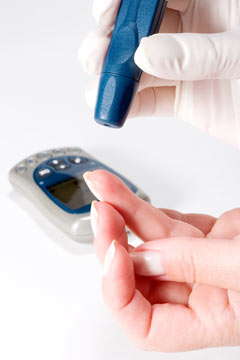
A different survey showed that among 135 migraine patients, 32% had metabolic syndrome and 11% had frank insulin resistance (high fasting insulin) (8). Only about 10% were obese or had elevated fasting blood glucose, which tells us that that the connection between metabolic syndrome and increased risk for migraine is not driven by body weight or blood sugar, but by insulin.

Features that track with insulin resistance and metabolic syndrome—such as hypertension, type 2 diabetes, and obesity—are common in patients with chronic migraine (6).

People who experience migraines are at greater risk for hypertension (high blood pressure) and stroke, both of which are vascular complications also commonly seen in people with type 2 diabetes or insulin resistance (9).

Research indicates that people who suffer migraines show adverse changes in blood vessel function throughout the body, which suggests migraines are “a local manifestation of a systemic disease rather than a primary brain phenomenon” (10). What this means in plain English is that migraines aren’t something that happen solely in the brain. In some people, they’re related to metabolic abnormalities in other parts of the body, some of which stem from chronically high insulin.

Among a cohort of adolescent migraineurs with obesity who participated in a weight loss program, compared to those who had remission of migraines, those whose migraines persisted had higher waist circumference, body mass index, triglycerides, and HOMA-IR, all of which indicate worse insulin sensitivity (11). Study subjects who were insulin resistant were 3.5 times more likely to suffer persistent migraines than were subjects who were insulin sensitive.

Is Migraine a Neurological Disorder?

As noted earlier, some migraines are accompanied or preceded by sensory disturbances or tingling or numbness in different parts of the body.

With this in mind, migraines are better thought of as neurological phenomena as opposed to severe headaches. Additionally, migraines have several pathological features in common with epilepsy, and multiple anti-epileptic drugs are effective for migraine (12).

It’s not known for certain what the exact mechanisms are behind migraine, and they may be different in different people. Some of the possibilities include:

  • Inflammation in the brain
  • Brain nerve excitotoxicity
  • Ion (electrolyte) imbalances in the brain, which alter the electrochemical properties of neuronal cell membranes
  • Blood glucose instability

Combined with the association between migraine and metabolic syndrome, the similarities between epilepsy and migraine point toward the ketogenic diet potentially being helpful for those with migraine. After all, epilepsy was the first condition for which a ketogenic diet was proven a successful therapy, and it remains the one with the most impressive track record (13).

The Ketogenic Diet for Migraine

Anecdotes about people freeing themselves from migraine abound on low carb and ketogenic forums, but the body of clinical scientific research on this is pretty small. Nevertheless, there are plausible mechanisms by which a KD might reduce or prevent migraines:

  • Reduced excitability in neurons
  • Reduced inflammation
  • Restoration of proper neuronal membrane potential (increased threshold for migraine)
  • Reduced fluctuations in blood glucose and insulin
  • Correction of fluid balance abnormalities in the inner ear

Some people adopt a ketogenic diet for weight loss and are pleasantly surprised to find that an unexpected “side effect” of keto is a reduction in the frequency and severity of migraines, or in some cases, complete remission.

The Evidence

This was the case for 47-year-old twin sisters in Italy: after implementing a KD for weight loss, they reported a significant reduction in the frequency and severity of their migraines (14).

According to detailed “headache diaries” they kept, they experienced “5—6 attacks/month of severe throbbing headache, of up to 72 hours’ duration; the severity was increased by movement and the attacks were accompanied by photophonophobia [sensitivity to light and sound], nausea and, very occasionally, vomiting.”

In both cases, remission of migraines coincided with following the diet, and migraines returned during periods when they went back to their usual higher-carb diet. However, even when they started eating more carbs, their migraines were reduced in frequency, intensity and duration.

This is in line with what’s been reported in people with epilepsy: some epileptics who experience seizure remission on a KD choose to abandon the diet, but when seizures return, they’re less frequent and severe than before. So it seems that, at least for some people, following a KD for some length of time may correct something at a fundamental level such that even when they go back to eating more carbs, their condition isn’t as severe as it was before doing the KD.

In this case study, the sisters didn’t avoid common dietary migraine triggers, such as aspartame, MSG, nitrates, nitrites, or caffeine. The study authors dismissed some of the potential reasons for migraine remission during the ketogenic periods, writing, “we attribute the improvement observed in these patients to ketogenesis, the sole event found to be time-locked to the disappearance (and recurrence) of their migraine attacks.” In other words, something unique to the KD was responsible for the improvement, rather than an avoidance of common dietary triggers.

Tests for celiac disease were negative in these two subjects, but that doesn’t rule out the possibility of non-celiac gluten sensitivity, which could be a migraine trigger for some people.

There’s increasing recognition in the medical community that some individuals who don’t have overt celiac disease may still have a sensitivity to gluten, and this can affect various tissue systems in the body, manifesting in ways as diverse as ataxia, anxiety, depression, fatigue, brain fog, headache, schizophrenia, psoriasis, dermatitis, inflammatory bowel disease, acid reflux, and autoimmune conditions (15, 16, 17).

Ketogenic diets aren’t grain-free by definition, but people who use low-carb high-fiber crackers or grain-based wraps would be taking in far less gluten than those on high-carb diets.

The promising findings about the KD for migraine in these two sisters prompted a larger study, this one involving 96 overweight female migraine sufferers (4). In the intervention group, 45 subjects followed a very low-calorie KD for one month, followed by a 5-month standard low-calorie diet. The other 51 subjects followed the standard diet for all 6 months.

In the KD group, attack frequency, number of days with headaches, and amount of medication used were significantly lower after the first month on the diet. In the group following the standard diet, the number of days without headaches decreased only after 3 months, and a significant decrease in attack frequency wasn’t seen until 6 months in. (That subjects on the standard diet improved at all might be due to the low-calorie nature of the diet. This might have induced beneficial metabolic changes, although not as substantial as those from the KD.)

Being that it can take a month or even longer to become fully “keto-adapted,” and some of the neurologically protective effects of a KD might take longer to be established, it would be nice to see studies looking at migraineurs who follow a KD for a longer period of time. But it’s encouraging that the KD showed favorable results even after just one month.

Should You Try a Ketogenic Diet for Migraine?

A better question than “should you try it” is, why wouldn’t you try it?

If you experience migraines, and medications and other interventions have failed you, you truly have nothing to lose by giving keto a go.

You might have to go without some of your favorite foods for a while, but there’s a chance that in exchange, you’ll be free of migraines, or at least get them less often and they won’t be as incapacitating. (And thanks to great keto cookbooks, you don’t actually have to give up your favorite treats!)

Considering the reduced quality of life migraineurs experience at the mercy of these disabling attacks and the lack of effective preventive strategies, the KD is certainly worth trialing.

https://ift.tt/2JbStJF
Wednesday, April 18, 2018

Healthy Keto Avocado Hummus

Healthy Keto Avocado Hummus

This tasty keto & paleo hummus combines some of the healthiest fats from avocado, macadamia nuts and extra virgin olive oil - all of these ketogenic foods are fantastic sources of heart-healthy monounsaturated fatty acids. Avocado and macadamias are also high in electrolytes, especially magnesium and potassium. You wouldn't believe how well soaked macadamia nuts work in hummus instead of the traditionally used high-carb chickpeas!

I served mine on top of baby sweet peppers, jalapeños and celery stalks. You can even serve them with freshly chopped carrots - just watch out for the extra carbs and stick with 1 to 2 carrots per serving.

Preparation time
Hands-on:    10 minutes
Overall:     2 hours 10 minutes
Nutritional values (per serving, 1/4 cup/ 55 g/ 1.9 oz)
Total Carbs 5.9 grams
Fiber 3.5 grams
Net Carbs 2.4 grams
Protein 2.6 grams
Fat 21.9 grams
of which Saturated 3.3 grams
Energy 216 kcal
Magnesium 33 mg (8% RDA)
Potassium 208 mg (10% EMR)

Macronutrient ratio: Calories from carbs (4%), protein (5%), fat (91%)

Ingredients (makes 8 servings, 2 cups)
  • 1 cup unsalted macadamia nuts (134 g/ 4.7 oz)
  • 1 large avocado (200 g/ 7.1 oz)
  • 2 cloves garlic, sliced
  • 2 tbsp tahini paste (32 g/ 1.1 oz)
  • 1/2 tsp sea salt, or to taste
  • 3 tbsp fresh lime juice (45 ml)
  • 2 tbsp extra virgin olive oil (30 ml)
  • Optional: fresh cilantro, to taste
Instructions
  1. Place the macadamia nuts in a container and fill with filtered water until they are submerged. Soak at room temperature for at least 2 hours or overnight.
  2. Strain and rinse the macadamia nuts after soaking and discard the soaking liquid.
  3. Peel the avocado and remove the seed. Peel and slice the garlic. Optionally, add fresh cilantro.
  4. Place all the ingredients into a food processor and process until smooth.
  5. Transfer into a bowl and drizzle olive oil on top. Garnish with more cilantro leaves. Serve with freshly chopped vegetables such as peppers, celery sticks and carrots. Store in an airtight container in the fridge for up to 5 days.
https://ift.tt/2vqaCkL

Tuesday, April 17, 2018

Best Keto Instant Pot Beef Stew

Best Keto Instant Pot Beef Stew

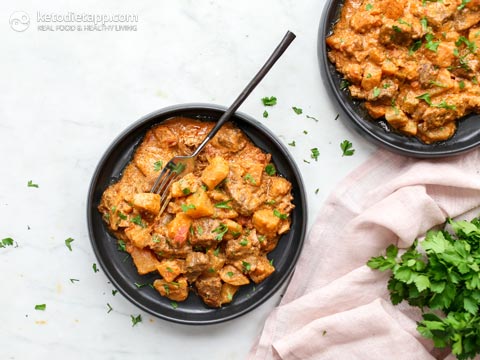
Deliciously tender beef cooked in a pressure cooker with low-carb vegetables, in super creamy grain-free tomato sauce. This is comfort cooking at its best.

What I love most about it is that you can make the whole meal in the Instant Pot! In just 90 minutes you've got a tasty keto dish with fall-apart meat and juicy vegetables cooked to perfection.

The only extra work is thickening the sauce but it's totally worth it. Since there is no flour allowed on a keto diet, most low-carb stews are thin and runny. That's not the case with this recipe.

Egg yolks are a fantastic alternative to flour resulting in super creamy sauce without the extra carbs. I've been using egg yolks to thicken sauces, gravies and even soups, including those in my Keto Slow Cooker & One-Pot Meals Book - always with a success!

If you you don't have an Instant Pot, use one of the options listed at the end of this recipe.

Preparation time
Hands-on:    30 minutes
Overall:      1 hour 30 minutes
Nutritional values (per serving, about 2 cups)
Total Carbs 14 grams
Fiber 5.8 grams
Net Carbs 8.2 grams
Protein 34.3 grams
Fat 35.7 grams
of which Saturated 14.8 grams
Energy 514 kcal
Magnesium 65 mg (16% RDA)
Potassium 1,074 mg (54% EMR)

Macronutrient ratio: Calories from carbs (7%), protein (28%), fat (65%)

Ingredients (makes 8 servings)
  • 1 medium yellow onion, chopped (110 g/ 3.9 oz)
  • 2 cloves garlic, minced
  • 1.2 kg boneless beef such as brisket or stewing steak (2.65 lb)
  • 1 rutabaga (swede), peeled and diced (400 g/ 14.1 oz)
  • 3 kohlrabi or turnips, peeled and diced (600 g/ 1.3 lb)
  • 4 celery stalks, chopped (160 g/ 5.6 oz)
  • 2 tbsp ghee or duck fat (30 g/ 1.1 oz)
  • 1 tsp sea salt, or to taste
  • 1/2 tsp ground black pepper
  • 1 tbsp paprika
  • 1/4 tsp ground allspice
  • 1 can unsweetened tomatoes or chopped fresh tomatoes (400 g/ 14.1 oz)
  • 1/2 cup water (120 ml/ 4 fl oz)
  • 8 large egg yolks
  • 1/4 cup chopped parsley (15 g/ 0.5 oz)

Note: Not sure what to do with the leftover egg whites? Try one of the options listed in my Keto Lemon Curd recipe!

Instructions
  1. Peel and dice the onion and mince the garlic. Cut the beef into large 2-inch (5 cm) pieces. Set aside.
  2. Peel the rutabaga and kohlrabi (or use turnips instead of kohlrabi). Cut them into about 1-inch (2.5 cm) pieces. Chop the celery stalks. Set all the vegetables aside.
  3. Set the Instant Pot to Sauté and add the onion (use 6 or 8-quart/L Instant Pot). Cook for just 3 minutes, until fragrant and then add the minced garlic. Cook for another 30 seconds.
  4. Add the beef chunks and season with salt and pepper. Cook for 2-3 minutes, or until browned from all sides while stirring to prevent burning.
  5. Add the paprika, allspice, chopped rutabaga, kohlrabi and chopped celery stalks.
  6. Mix until combined and add the canned tomatoes. Turn the Sauté off.
  7. Cover with a lid and set to Manual. Cook on high pressure for 35 minutes. When the program has finished, let the steam release naturally for 15-20 minutes, and then turn the valve to venting to release the remaining steam.
  8. To make the creamy sauce, whisk the egg yolks with 1/2 cup of water. Keep the egg whites for another recipe (see suggestions listed in my Keto Lemon Curd).
  9. Strain the juices into a small saucepan and bring to a simmer. Temper the red sauce into the egg yolk mixture while whisking.
  10. When you add about half of the red sauce, return everything into the saucepan with the remaining red sauce. Cook while stirring for 4-6 minutes, until thick and creamy.
  11. If the sauce is not smooth or has curdled, use an immersion blender and process until smooth and creamy (be careful not to get burnt!).
  12. Pour the creamy sauce back into the pot with the cooked meat & vegetables. Stir to combine.
  13. Serve immediately (about 2 cups per serving) with freshly chopped parsley. To store, let it cool down and refrigerate for up to 5 days. I haven't tried freezing it and I'm not sure whether the sauce would separate if you do. You could divide the mixture into single-serving containers or freezer bags and freeze for up to 3 months.

If you don't have an Instant Pot, try some of the following alternatives:

Oven Baking

Preheat the oven to 150 °C/ 300 °F. Place all ingredients in a large baking dish (optionally you can brown the onion, garlic and meat). Cover with foil or a lid and bake for 4 hours.

Add some water if needed (check half way through to ensure the haven't dried out). After 4 hours, remove the foil and increase the temperature to 200 °C/ 400 °F. Cook for another 15-20 minutes. Then, follow the instructions from step 8.

Dutch Oven

Grease a large Dutch oven (6 -quart/L or more) with ghee. Add chopped onion and cook over a medium heat for 4-5 minutes. Then add garlic and cook for a minute. Add the chopped rutabaga, kohlrabi, celery, salt, pepper, paprika, allspice and tomatoes. Add 1-2 cups of water. Bring to a boil over a high heat and then turn down to low.

Cook for 4 hours, checking every hour to ensure there is enough juices. If needed, add a cup or two more water. When done, take off the heat. Optionally, crisp up in the oven preheated to 200 °C/ 400 °F for 15-20 minutes. Then, follow the instructions from step 8.

Slow Cooker

Optionally, you can brown the onion, garlic and meat before adding into the slow cooker. Place all ingredients in the slow cooker (6 -quart/L or more).

Cover with a lid and cook for 3-4 hours on high or 6-8 hours on low. Optionally, crisp up in the oven preheated to 200 °C/ 400 °F for 15-20 minutes. Then, follow the instructions from step 8.

https://ift.tt/2JVbhOv

Monday, April 16, 2018

Keto Pumpkin Cheesecake Breakfast Pockets

Keto Pumpkin Cheesecake Breakfast Pockets

These low-carb breakfast hot pockets are filled with pumpkin cheesecake. Easy to make, grain-free and vegetarian meal prepared in under 30 minutes.

Here is what's most amazing about this recipe - All you need for the dough is just 2 ingredients! It's a simplified version of the FatHead dough but without eggs and cream cheese. Easy-peasy ketogenic treat!

Just like my Apple Pie Keto Hot Pockets, it's a recipe successfully adapted from an all-time favourite created by Vicky and Rami of Tasteaholics - the Keto Morning Hot Pockets.

You can get creative and use any sweet or savoury filling. You can even make nut-free hot pockets by using fax meal instead of almond flour. The options are endless!

Preparation time
Hands-on:    10 minutes
Overall:     30 minutes
Nutritional values (per serving)
Total Carbs 10.6 grams
Fiber 2.5 grams
Net Carbs 8.1 grams
Protein 20.8 grams
Fat 41.8 grams
of which Saturated 20.7 grams
Energy 455 kcal
Magnesium 65 mg (16% RDA)
Potassium 322 mg (16% EMR)

Macronutrient ratio: Calories from carbs (7%), protein (17%), fat (76%)

Ingredients (makes 2 servings) Filling: Dough:
  • 3/4 cup shredded mozzarella (85 g/ 3 oz) - use low-moisture, part-skim, shredded mozzarella cheese; not fresh mozzarella.
  • 1/3 cup almond flour (33 g/ 1.2 oz)
Instructions
  1. Preheat the oven to 200 °C/ 400 °F (fan). Prepare the filling. Place the softened cream cheese, pumpkin puree, egg yolk, Erythritol and pumpkin pie spice in a bowl.
  2. Mix until well combined. Set aside.
  3. Place the shredded mozzarella in another bowl and microwave for 30-60 seconds, or melt on the stove over a low heat.
  4. Mix in the almond flour.
  5. Using a fork, combine well until you create dough.
  6. Roll the dough out between 2 sheets of parchment paper until very thin (I used a silicon mat and silicon rolling pin).
  7. Scoop the pumpkin cheesecake filling in the centre of the dough.
  8. Fold over like an envelope and seal the dough.
  9. Poke some holes for releasing the steam while baking. Transfer onto a baking sheet lined with parchment paper.
  10. Bake for about 15 minutes or until golden brown on top.
  11. When done, remove from the oven and let it cool down for a few minutes. Slice and serve!
  12. Optionally, dust with some powdered Erythritol or Swerve, and cinnamon. The pockets can be stored in the fridge for up to 3 days. Reheat before serving or eat cold.
https://ift.tt/2J1jQGa